18
Sep 26
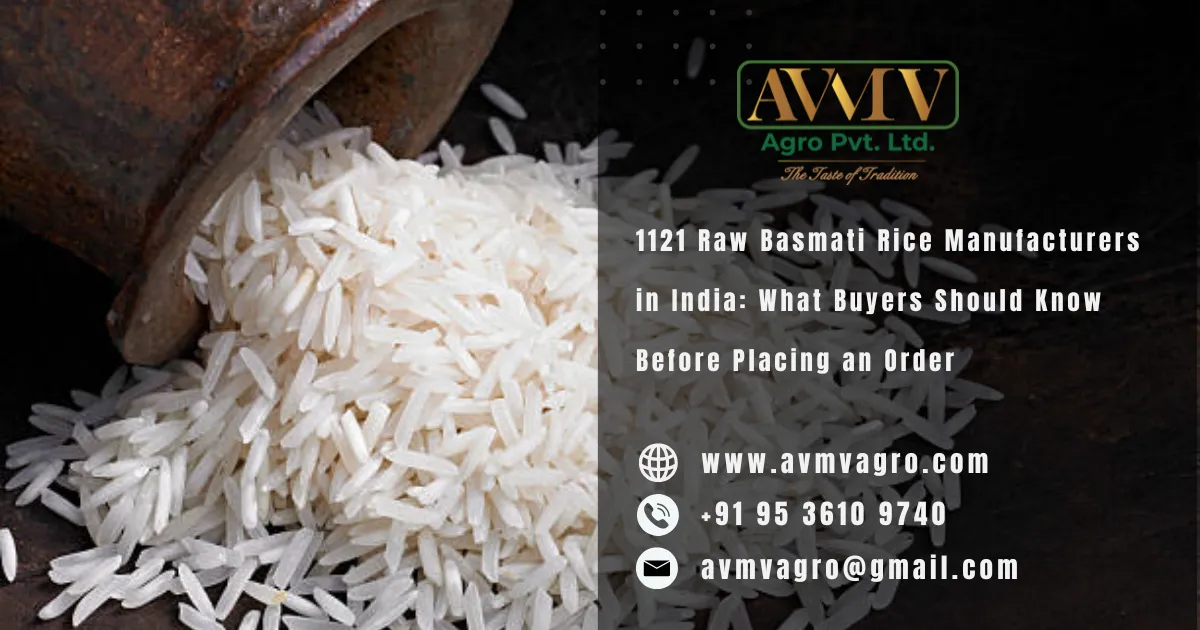
1121 Raw Basmati Rice Manufacturers in India: What Buyers Should Know Before Placing an Order
Sourcing rice for a business isn't the same as buying it for the kitchen. One bad container can mean rejected shipments, unhappy retailers, and a dent in a reputation that took years to build. That's the backdrop against which most import and wholesale teams start looking for 1121 Raw Basmati Rice Manufacturers in India — they need a supplier who understands grain consistency, not just someone who can quote a price.
AVMV AGRO PRIVATE LIMITED works in exactly this space. The company processes and supplies Basmati rice, including the 1121 variety in its raw form, to buyers who care about grain length, aroma, and batch-to-batch reliability. This article looks at what raw 1121 Basmati actually is, how it differs from other grades, and what to check before signing off on a supplier.
What Makes 1121 Basmati Different
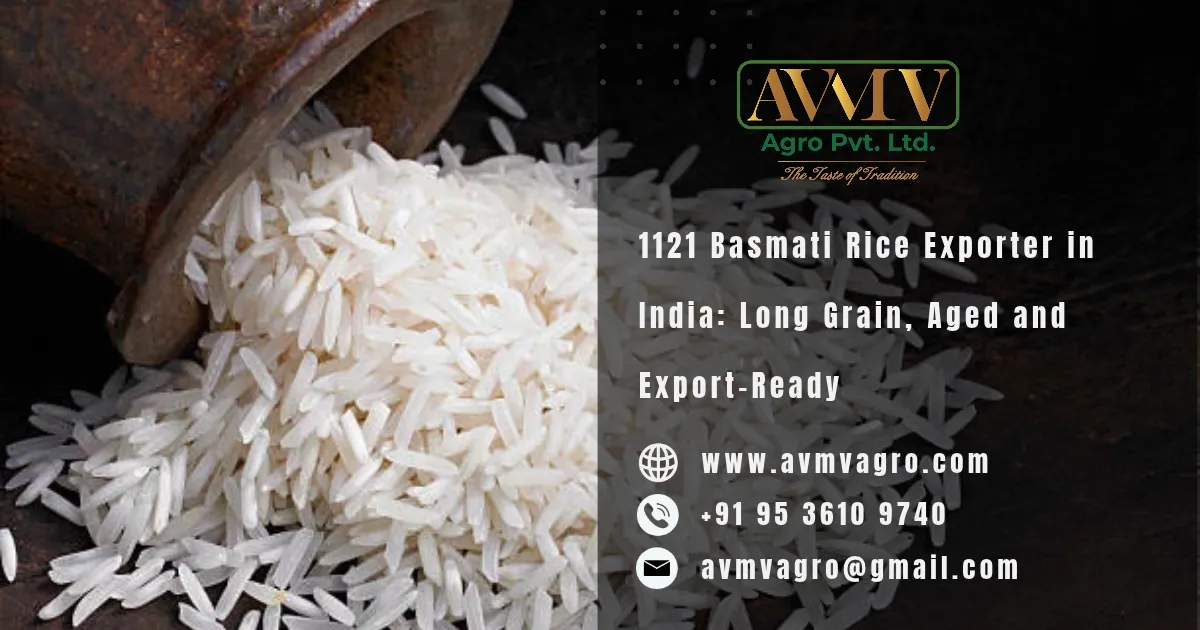
1121 is a hybrid Basmati variety developed for exceptionally long grains — often stretching beyond 8mm after cooking, nearly double their raw length. That elongation, paired with a light, fluffy texture and a mild aromatic profile, is why it dominates export orders from the Middle East, Europe, and parts of Africa.
"Raw" simply means the paddy has been milled without steaming. The rice hasn't gone through the partial pre-cooking process that gives steamed or parboiled grains their firmer bite. Raw 1121 tends to suit buyers who want a softer, more delicate grain for pilafs, biryanis, and everyday cooking, while steamed variants are usually preferred where grains need to hold their shape under heavier handling.
Why Buyers Search for Manufacturers Directly
A lot of import businesses have been burned by middlemen who repackage rice without disclosing its actual milling source. Going straight to 1121 Raw Basmati Rice Manufacturers in India cuts out a layer of guesswork — you can ask about the paddy's origin, the milling equipment, and the storage conditions, rather than relying on a trader's word.
Grain Quality and Sorting
Good manufacturers run rice through multiple stages of colour sorting and length grading. This matters more than it sounds — a single batch with mixed grain lengths cooks unevenly, and that's usually the first thing a retail buyer complains about.
Moisture Control
Rice that's stored or shipped with the wrong moisture content is prone to mould and weight loss in transit. Manufacturers with proper drying and storage facilities keep moisture within a tight band, which protects both quality and shelf life.
Documentation
Export-ready suppliers should be able to produce FSSAI registration, phytosanitary certificates, and lab reports on request. If a manufacturer hesitates on paperwork, that's worth noticing.
Raw vs Steam: Choosing the Right Grade
Buyers new to Basmati sourcing sometimes assume "raw" and "steam" are interchangeable marketing terms. They're not, and the difference affects cooking behaviour, storage life, and price. This is where working with an established 1121 Steam Basmati Rice Exporter in India alongside a raw rice supplier can help — some buyers actually split orders between the two grades depending on the end market.
Steamed 1121 generally has a longer shelf life and holds up better in bulk catering, while raw 1121 is favoured for premium retail packs where texture and aroma are the selling point. A supplier who can offer both, rather than pushing one grade regardless of your use case, is usually a safer long-term partner.
Traditional Basmati Alongside 1121
Not every order is about 1121. Some buyers, particularly in markets with an older, more established Basmati customer base, still prefer the classic long-grain varieties. A reliable Traditional Basmati Rice Manufacturer in India will typically carry both 1121 and traditional stock, which is useful if your business serves more than one region with different taste expectations.
What to Ask a Rice Exporter Before You Commit
Before finalising a supplier, it helps to treat the conversation less like a sales call and more like due diligence:
- Ask for a sample batch and test it yourself rather than relying on photographs.
- Confirm milling capacity against the order size you actually need — some suppliers overpromise on volume.
- Check whether they operate as a genuine Basmati Rice Exporter in India with their own export licence, or whether shipments go through a third party.
- Ask how paddy is sourced — direct from farmers, through aggregators, or a mix of both.
- Clarify packaging options, since export packaging requirements vary widely by destination country.
Beyond Basmati: Raw Rice Manufacturing in General
Some manufacturers extend their operations beyond Basmati into non-Basmati raw varieties as well. If your business also handles broken rice, parboiled rice, or regional short-grain varieties, it's worth checking whether your Raw Rice Manufacturer in India can service those categories under one relationship, rather than juggling separate suppliers for each grade.
Conclusion
Choosing between the many 1121 Raw Basmati Rice Manufacturers in India ultimately comes down to three things: can they prove grain quality consistently, can they document it properly, and will they still be reliable on your fifth order, not just the first. AVMV AGRO PRIVATE LIMITED positions itself around exactly that combination — raw and steam 1121, traditional Basmati stock, and the export documentation buyers ask for. Whatever grade suits your market, the safest move is still the simple one: request samples, check the paperwork, and talk to the manufacturer directly before you commit to a container.
FAQs
What is the difference between raw and steam 1121 Basmati rice?
Raw 1121 is milled without pre-cooking, giving a softer, more delicate grain. Steam 1121 goes through a steaming process before milling, which makes the grain firmer and extends its shelf life — useful for bulk catering and longer transit times.
How long does 1121 Basmati rice grain become after cooking?
Well-aged 1121 grains typically extend to around 8mm or more after cooking, which is why it's prized for its distinctive long-grain appearance in dishes like biryani and pulao.
Is 1121 Basmati rice the same as Traditional Basmati?
No. 1121 is a hybrid variety bred for extra-long grains and a milder aroma, while Traditional Basmati (such as Basmati 370 or Dehradun Basmati) tends to have a shorter grain and a stronger, more classic fragrance. Many manufacturers supply both.
What certifications should a Basmati rice exporter in India have?
Look for FSSAI registration, an APEDA certificate for agricultural exports, and where relevant, phytosanitary certification for the destination country. Ask to see these directly rather than taking them on trust.
Can one supplier handle both raw and steam grades for export orders?
Yes, many established manufacturers, including AVMV AGRO PRIVATE LIMITED, process and export both grades, which simplifies sourcing for buyers who need to split orders across raw and steam Basmati depending on the destination market.