18
Sep 26
1121 Basmati Rice Exporter in India: A Buyer's Guide to Sourcing the Right Grade
Walk into any wholesale rice market in Delhi or Karnal and ask for "1121," and you won't need to explain yourself further. It's become something close to shorthand for premium extra-long-grain Basmati, the variety most overseas buyers picture when they think of Indian rice at all. That popularity is exactly why sourcing it properly takes more care than the name suggests — plenty of traders will sell you something labelled 1121 that doesn't quite deliver on grain length, aroma or cooking behaviour once it's in your kitchen or on your retail shelf.
AVMV AGRO PRIVATE LIMITED processes and ships this variety alongside other Basmati grades, and this guide sets out what actually separates a dependable 1121 Basmati Rice Exporter in India from a trader reselling whatever paddy came through the door that week. Whether you're buying raw, steam or aged stock, the same underlying questions apply, and they're worth working through before you commit to a container.
What Is 1121 Basmati, and Why Does It Command a Premium?
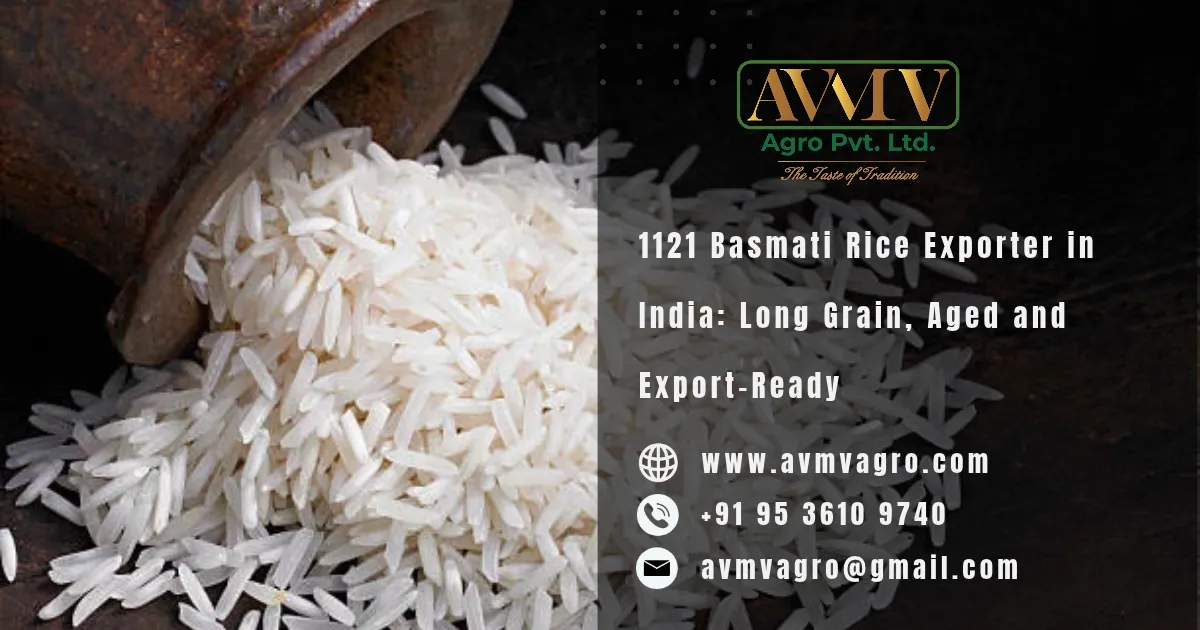
1121 is a hybrid Basmati variety developed for extra-long grain length — often stretching beyond 8mm after cooking, noticeably longer than older traditional types. That length, combined with a fluffy texture and a grain that doesn't clump, is why it dominates export volumes to the Middle East, the UK and North America. Millers and buyers alike prize it because it behaves predictably: the same batch cooked the same way tends to give the same result, which matters enormously once you're running a restaurant kitchen or a packaged retail line at scale.
None of that predictability survives careless handling, though. Moisture content, sorting accuracy and storage conditions between harvest and shipment all affect whether the grain you receive matches the grade on the invoice. A serious Basmati Rice Exporter in India treats those steps as non-negotiable rather than an afterthought.
Raw or Steam — Choosing the Right 1121 Grade for Your Market
Not all 1121 rice is processed the same way, and the difference shapes everything from cooking time to shelf stability.
1121 Raw Basmati Rice Manufacturers in India
Raw 1121 is milled without steaming, giving it a paler colour, a slightly shorter cook time, and — most buyers say — a cleaner, more delicate fragrance. It's a common choice for premium retail packs and fine-dining kitchens where aroma is the selling point. The catch is that raw grain is more fragile during milling, so working with established 1121 Raw Basmati Rice Manufacturers in India matters here: a mill running old or poorly calibrated machinery will hand you a higher broken-grain percentage, and that eats straight into your margin.
1121 Steam Basmati Rice Exporter in India
Steaming the paddy before milling toughens the grain, cutting down on breakage and extending shelf life considerably — a genuine advantage if your rice is spending weeks at sea or months in a warehouse before it reaches the end customer. A reliable 1121 Steam Basmati Rice Exporter in India should be able to hand over the actual steaming parameters used and lab data on moisture and breakage, not just tell you it's "good quality" and leave it there.
Traditional Basmati Rice Manufacturer in India and Pusa Varieties
Buyers occasionally ask how 1121 compares with older varieties. Traditional Basmati, sourced from smaller landholdings and often aged for a year or longer before milling, carries a different flavour profile and typically a higher price tag. A Traditional Basmati Rice Manufacturer in India working these lines usually deals in tighter volumes with a stronger emphasis on traceability. Pusa Basmati sits somewhere in between — long grain, good ageing potential, a slightly different aromatic character to 1121. Buyers comparing Pusa Basmati Rice Exporters in India against 1121 suppliers are really choosing between two premium options rather than trading down, and the right pick often comes down to your specific market's taste preference.
Raw Rice Manufacturer in India
Many buyers also need non-aromatic raw rice for blending, staple lines, or price-sensitive markets alongside their Basmati orders. Sourcing both from the same Raw Rice Manufacturer in India can simplify logistics and paperwork, provided the supplier keeps the two product streams properly separated through milling and storage so there's no cross-contamination between grain types.
What to Verify Before You Place a Bulk Order
A good sample and a competitive quote aren't enough on their own. Before signing off on a new supplier, it's worth asking for:
- Traceability records — which region the paddy came from and which mill processed it.
- Lab reports — moisture content, average grain length before and after cooking, and broken-grain percentage, matched to the actual lot you'd be buying rather than a curated showcase sample.
- Export compliance documentation — phytosanitary certificates and residue testing relevant to your destination country, since these requirements shift periodically.
- Repeat-sample consistency — request the same specification twice, weeks apart, and compare. That gap tells you more about a supplier's real quality control than any single sample ever will.
- Packaging specifications — jute, PP bags or vacuum-sealed retail packs, depending on shipment size and how the rice will be sold on.
This isn't a special checklist unique to rice — it's the standard due diligence any importer runs on a new supplier in any food commodity. Skipping it because the first sample tasted right is how buyers end up with an inconsistent second and third shipment.
Why Buyers Work With AVMV Agro
AVMV AGRO PRIVATE LIMITED builds its offering around that same consistency question, sourcing 1121 alongside Pusa and traditional Basmati varieties and processing both raw and steam grades for buyers who need shipment-to-shipment reliability rather than a single lucky batch. For businesses weighing up options as a 1121 Basmati Rice Exporter in India, that combination of variety expertise, documented quality control and export handling tends to matter more over time than a marginally lower quote, since inconsistent rice costs more in returns, complaints and lost repeat business than it ever saves on the invoice.
If you're sourcing 1121 for foodservice, retail or private-label packaging, it's worth having a direct conversation about your specification sheet — grain length, moisture tolerance, packaging format — before the first purchase order goes out, not after.
The Global Demand Picture for 1121
India supplies most of the world's traded Basmati, and 1121 makes up a large share of that volume, which is part of why the market is so crowded. Thousands of mills and traders handle this variety, and quality still varies enormously between them despite the shared name on the label. Demand climbs sharply around Middle Eastern festive seasons and stays consistently strong across UK and North American grocery and foodservice channels, where South Asian cuisine has become a mainstream staple rather than a niche category.
That seasonal pressure is exactly when corners get cut — some suppliers loosen their sorting standards or blend in shorter grain to keep volumes moving when demand outstrips supply. Buyers who build a lasting relationship with one 1121 Basmati Rice Exporter in India, rather than switching suppliers purely on spot price each quarter, tend to see far fewer surprises when a container is finally opened.
Compliance paperwork is the other area that trips up newer buyers. Pesticide residue limits, fumigation certificates and phytosanitary requirements differ by destination country and get revised periodically as food safety rules evolve. A supplier who treats this as routine housekeeping, rather than a last-minute scramble once an order is confirmed, is usually a reliable sign they're set up for repeat export business rather than one-off sales.
Frequently Asked Questions
What makes 1121 Basmati different from other Basmati varieties?
1121 is bred for extra-long grain length and strong elongation on cooking, which is why it's become the dominant export variety for premium Basmati markets. Other varieties, including Pusa and traditional types, offer different grain lengths and aromatic profiles at similar or higher price points.
Is raw or steam 1121 Basmati better for export shipping?
It depends on your logistics. Raw 1121 suits buyers prioritising a delicate aroma and shorter cooking time, while steam 1121 holds up better over long shipping routes and extended storage because the grain is less prone to breaking.
How do I check the quality of 1121 rice before committing to a bulk order?
Ask for a recent lab report on moisture content, grain length and broken-grain percentage, and insist on a sample drawn from the actual lot on offer rather than a general showcase batch.
Does AVMV Agro supply both 1121 and Pusa Basmati varieties?
Yes — AVMV Agro works across 1121, Pusa and traditional Basmati lines, along with non-aromatic raw rice, so buyers with mixed sourcing needs can often consolidate orders with a single supplier.
What packaging is available for bulk 1121 Basmati exports?
Standard options include jute and PP bags for bulk shipment, plus vacuum-sealed or retail-ready packaging for buyers who need shelf-ready product. The right format depends on shipping distance and your destination market's retail norms.
Which countries buy the most 1121 Basmati rice from India?
The Middle East remains the largest destination by volume, with steady demand from the UK, the US and the EU, and growing interest from Southeast Asian markets — though exact figures shift from year to year with trade policy and currency movements.
Conclusion
1121 Basmati earns its reputation honestly — the grain length and cooking behaviour are genuinely distinctive — but that reputation is also exactly why the market is full of suppliers trading on the name without matching it on quality. The variety matters, the processing method matters, and the exporter's own documentation and consistency matter just as much as either. AVMV AGRO PRIVATE LIMITED works with buyers on that basis, matching the right grade and processing method to the right use case and backing it with the traceability that keeps a trading relationship going past the first order. If you're comparing options for a 1121 Basmati Rice Exporter in India, start with your specification sheet rather than the price list — it saves time for everyone involved.